
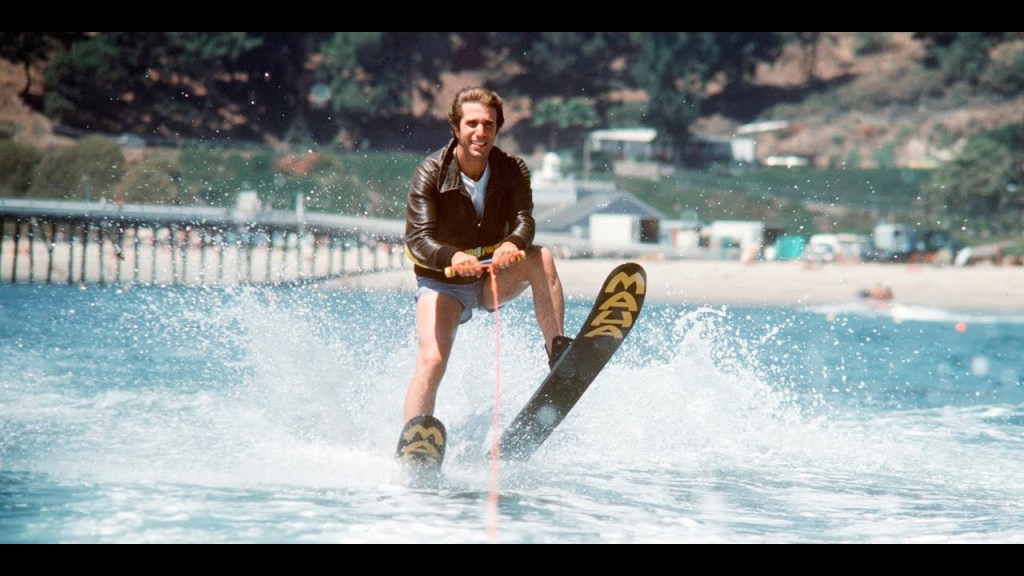
In pop culture, “jumping the shark” has become shorthand for the moment something great loses its magic — when a beloved TV show, brand, or even business tries something gimmicky or off-track in an attempt to stay relevant.
The phrase comes from the Happy Days episode in 1977 when Fonzie, in leather jacket and water skis, literally jumps over a shark. Critics and fans alike later saw it as a turning point — a desperate stunt signalling the show’s creative decline.
But here’s the overlooked part:
Happy Days aired 164 more episodes after that moment. That’s two-thirds of the series — after it supposedly peaked.
So maybe that jump wasn’t the end. Maybe it was just a wobble.
And maybe there’s a lesson here for professional services firms — especially in architecture, engineering, and design— navigating their own moments of reinvention, reinvigoration, or even risk.
Yes – I’m old enough to be using Happy Days as a reference!
The Fear of Falling Behind (and Overcorrecting)
In architectural and engineering practices, the pressure to adapt — to appear “innovative,” “digital,” or “diversified” — can push firms into decisions that risk disconnecting from their true value proposition. Whether it’s:
- Launching a “tech lab” with no clear commercial pathway,
- Rebranding away from a respected name to chase younger markets,
- Adopting SaaS tools that don’t align with real project workflows,
…these well-meaning moves can look a lot like a Fonz-on-waterskis moment: more spectacle than substance.
Writing in Forbes, Professor Benjamin Laker notes that leaders often “jump the shark” when they pursue novelty at the expense of authenticity, leading to lost trust, culture clashes, and strategic confusion.
But What If It’s Not the End?
The reality for professional services firms is more complex. Not every reinvention lands perfectly — and that’s okay. In fact, many architecture and engineering firms that are now thriving have wobbled at some point:
- Arup went through major structural and leadership changes post-2000s but has since repositioned itself globally through strong values and sustainability-first thinking.
- AECOM’s pivot toward digital infrastructure raised questions among traditionalist clients, but it’s increasingly seen as a strength in multidisciplinary delivery.
- Firms that invested early in BIM or digital twins were once seen as overly niche or academic — now they’re leading major precinct projects with data-informed insight.
What these firms share is not perfection, but persistence. They didn’t let one misstep define their trajectory. They corrected course, realigned teams, and continued to deliver — just like Happy Days did, season after season.
Don’t Panic. Recalibrate.
Rather than fearing the “shark jump,” firms should ask:
- 🛠 Is this initiative aligned with our long-term purpose?
- 💬 Have we engaged our team and clients in shaping this change?
- 📊 Are we measuring success in ways that go beyond optics — like actual project performance, team culture, and client satisfaction?
Sometimes a pivot is essential. Sometimes it’s too early. Sometimes it flops. But that doesn’t mean it’s over.
As Happy Days proved — and as many A&E firms can confirm — the journey can continue well past the moment of perceived decline.
💡 Final Thought: Make the Jump Count
If you’re a leader in an architecture or engineering firm, don’t be afraid to take risks — but make sure they’re rooted in strategy, values, and a deep understanding of your people and clients.
After all, jumping the shark only becomes a punchline if you stop paddling.
References:
- Understanding the Risks of ‘Jumping the Shark’ in Leadership – Forbes, Feb 2024
- 13 Hugely Successful Companies That Reinvented Their Business – US Chamber of Commerce
- The Pitfalls of Trend-Chasing in Professional Services – Harvard Business Review, 2023
 Designing Insights